Home › Gravel-to-Asphalt Conversions
We specialize in gravel to asphalt driveway conversions in Greensboro, NC to eliminate mud, dust, and ruts. Our crew regrades, compacts, and paves over existing gravel or dirt. Enjoy a clean blacktop surface that is easier to drive on and maintain.
Precision Asphalt Greensboro provides professional gravel to asphalt driveway throughout Greensboro, NC, North Carolina and the surrounding area. Our licensed, insured crew delivers safe, clean, on-time work with a free estimate before anything begins. Call (336) 604-0154 or request your free quote.
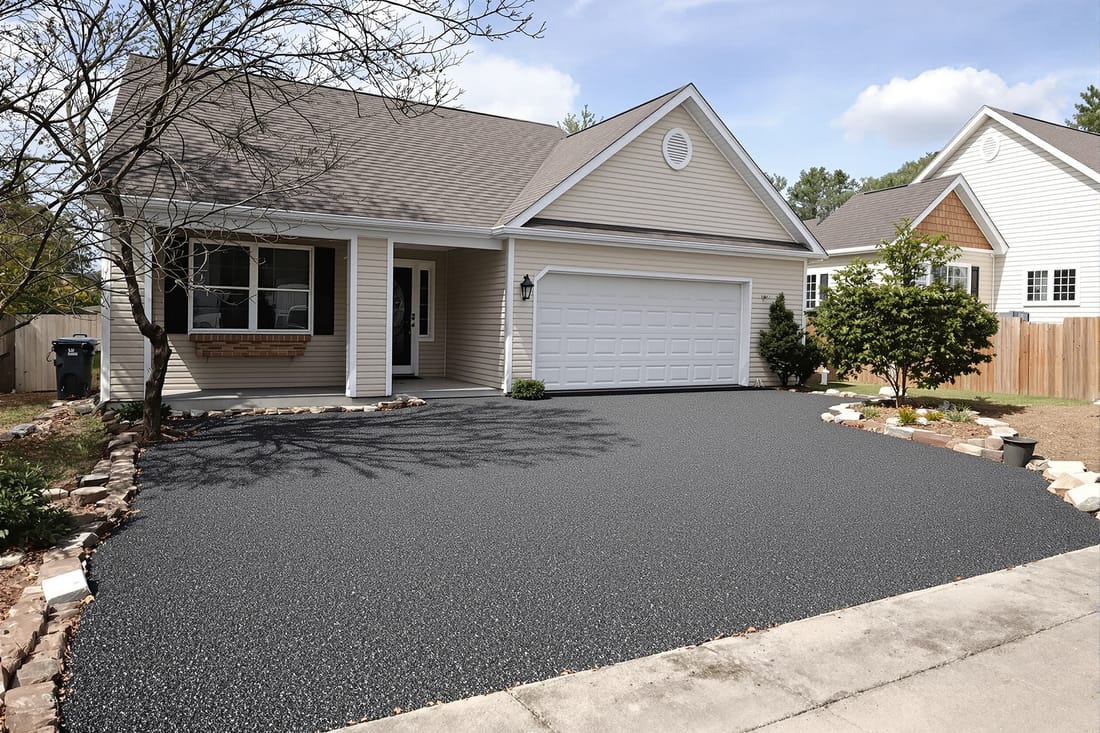
Turn Your Gravel Driveway Into a Smooth Asphalt Surface
If you are tired of dust, ruts, and muddy tire tracks, a gravel to asphalt driveway conversion can be a big quality-of-life upgrade for your Greensboro home or business. At Precision Asphalt Greensboro, we focus specifically on taking existing gravel driveways and turning them into clean, solid asphalt surfaces that drain correctly and last.
Gravel driveways in the Triad take a beating from heavy summer storms, winter freeze-thaw cycles, and daily traffic. Over time you end up with washouts at the bottom of hills, scattered rock in the yard, and low spots that stay wet. Asphalt solves many of those problems, but only if the base under your driveway is evaluated and rebuilt the right way. That is where our process is different. We do not just lay a thin layer of asphalt over gravel and hope for the best. We look at what is under the gravel, how water moves across your property, and how you actually use the driveway day to day.
Whether you have a short residential drive off a city street in Greensboro or a longer private gravel lane outside the city limits, we can usually work with the existing stone as part of the new base. That often saves you money compared to a completely new build. During your estimate, we will walk the full length of the driveway with you, point out potential problem areas, and explain exactly what we would change and why, in plain language instead of contractor jargon.
Our Step-by-Step Gravel to Asphalt Driveway Conversion Process
A good asphalt driveway in Greensboro starts with careful base work. Here is how Precision Asphalt Greensboro typically converts gravel driveways to asphalt.
1. Evaluation and measurements. We check the current gravel depth, measure driveway width and length, and look for soft spots, standing water, and areas where cars commonly park or turn. We also locate any buried utilities like water lines or low-voltage wiring that might be near the work area.
2. Grading and base repair. We use grading equipment to reshape the existing gravel, cutting out soft organic material and building a consistent slope so water will run off the driveway instead of sitting on it. In low or soft areas we add compactable stone (usually a crushed granite or ABC stone common in North Carolina) to bring the base up to proper depth. This step is critical on older gravel drives that have sunk or rutted over the years.
3. Compaction. Once the base is shaped, we compact it with a vibratory roller. For most residential drives we aim for a finished base depth of 4 to 6 inches of well-compacted stone. On driveways that see heavier vehicles, such as work trucks, delivery trucks, or RVs, we may recommend additional base thickness. Proper compaction reduces future settling and cracks.
4. Tack coat (when needed). Where we are tying new asphalt into an existing asphalt street, parking area, or previous patch, we apply a tack coat so the new layer bonds correctly. This creates a seamless transition that does not unravel at the edges.
5. Asphalt paving. For most gravel to asphalt driveway projects in Greensboro, we install a 2.5 to 3 inch compacted asphalt layer for residential use, and 3 to 4 inches for heavier use drives. We spread and level the hot mix, then roll it to the correct thickness and smoothness. Edges are hand finished to prevent crumbling.
6. Final checks and cleanup. We make sure water sheds off properly, check transitions to the street, garage, and walkways, and clean up loose stone along the shoulders. Before we leave, we walk the drive with you so you know how long to stay off it and how to care for it in the first weeks.
Design Options and Cost Factors for Greensboro Driveways
There is no one-size price or design when converting a gravel driveway to asphalt. Precision Asphalt Greensboro walks you through realistic options so you know what you are paying for.
Driveway length and width are the most obvious cost factors, but they are not the only ones. The condition of your existing gravel base has a big impact. If your driveway already has a deep, well-compacted stone base, we may be able to reuse most of it. That keeps costs down. If the base is thin, full of mud, or was built on top of topsoil, we will need to excavate and rebuild certain areas. That adds some cost up front, but it prevents much more expensive repairs later.
Asphalt thickness is another choice. Many Greensboro homeowners choose a standard residential thickness, which is enough for passenger vehicles and light trucks. If you expect frequent heavy deliveries, have a work trailer, or park an RV, we will likely recommend a thicker asphalt section or a reinforced apron near the street or parking area. We clearly label these options in your quote so you can decide what fits your use and budget.
You can also decide on layout improvements during the conversion. Common upgrades include widening tight curves, adding a parking pad next to the garage, or straightening awkward sections that are hard to navigate in the rain or at night. It is more efficient to make these changes while we are already rebuilding the base. If you want a crisp edge, we can cut the sides neatly and backfill with topsoil for grass, or use compacted stone shoulders where you may occasionally drive off the edge.
We also talk about surface finish. Standard machine-finished asphalt is smooth enough for everyday use and snow shoveling, but we can tighten up the compaction pattern for areas where kids ride bikes or play basketball. While pure color options are limited compared to decorative concrete, we can plan for future sealcoating that gives a uniform rich black look and additional UV protection.
Local Conditions, Timing, and Common Issues We Solve
Converting a gravel to asphalt driveway in Greensboro means working with our specific climate and soil conditions. Our clay-based soils can hold water, which is bad news if the base is not built correctly. At Precision Asphalt Greensboro, we pay special attention to drainage. We often add a slight crown down the center of the driveway or a consistent cross slope so water runs off. In areas where water naturally crosses the drive from a hillside or neighbor’s yard, we may recommend a shallow swale or culvert upgrade instead of simply paving over the problem.
Timing matters here in the Triad. The best months for gravel to asphalt driveway work in Greensboro are typically April through early June and September through October. Those periods offer warmer temperatures without the extreme heat that can make the asphalt cool too quickly or stay too soft. We can still pave in other months, but we may recommend different start times during the day, such as later mornings in winter or earlier starts in peak summer, to get the best result.
Some common issues we run into include soft spots that were hidden under the gravel, extremely dusty stone that prevents proper bonding, and driveways that are flat with no real drainage path. When we find soft areas, we remove the bad material and replace it with good stone, then recompact. If the gravel is too dusty, we may need to reshape and sometimes add fresh stone to create a better base before paving. For flat or low driveways, we might adjust the profile or add a gentle slope toward a ditch line so water does not sit on the new asphalt.
We also keep municipal and HOA concerns in mind. In some parts of Greensboro and Guilford County, there are guidelines about driveway entrances, culvert sizing, or work inside the right-of-way. If your conversion will change the driveway width at the street or affect an existing pipe, we will point that out during the estimate so you can plan for any approvals that might be needed.
What to Expect From Estimate to Finished Asphalt
When you contact Precision Asphalt Greensboro about converting your gravel driveway to asphalt, we start with a site visit, not a quick guess over the phone. We measure, check the base, ask how you use the driveway, and discuss any changes you are considering. You receive a written proposal that breaks out base repair, asphalt thickness, and any optional layout changes, so you know exactly what is included.
Once you approve the work, we schedule your project based on both your calendar and the weather forecast. On most residential gravel to asphalt driveway conversions, the work itself takes 1 to 2 days. Longer or more complex driveways can take a bit more time, especially if base repairs are extensive. We coordinate where you should park during the work and how long to stay off the new asphalt. Typically, you can walk on it within a few hours and drive on it after 24 to 48 hours, depending on temperature.
After the driveway is paved, we provide simple care tips. We generally recommend waiting a full season before applying any sealer so the asphalt has time to cure properly. During the first year, try to avoid parking heavy vehicles in exactly the same spot for long periods on very hot days, and be cautious when using jacks or kickstands that concentrate weight on a small point. We also show you which edges to watch after big storms so you can call us early if you notice any erosion or unusual settlement.
Our goal is that your new asphalt driveway feels like a clear upgrade from gravel in every way. Less dust on your vehicles, smoother snow removal in the occasional Greensboro winter storm, cleaner entry into the house, and a driveway that looks finished and intentional. By focusing on the specific challenges of converting gravel to asphalt, Precision Asphalt Greensboro helps you get a driveway that holds up to real life in central North Carolina, not just the day it is paved.